


If osteochondrosis is treated promptly and the disease has not progressed to an advanced stage, it is possible to successfully arrest the first symptoms and prevent the condition from getting worse.Therefore, if a person develops characteristic symptoms of osteochondrosis, it is not recommended to delay diagnosis and see a doctor.Only timely prescribed treatment can help halt the progression of the pathology in modern humans at any age.

How to recognize the development of osteochondrosis?
Due to degenerative dystrophic changes in the intervertebral disc, which gradually affects the bone tissue of the vertebra itself, spinal osteochondrosis occurs.The pathology first manifests as discomfort and pain, followed by an exacerbation of symptoms, acute pain and swelling, and impairment of spinal function.In severe cases, dangerous complications can occur, sometimes leaving patients disabled.
reason
This disease may appear due to the body being affected by negative factors, namely:
- hypothermia;
- Incorrect load distribution;
- sedentary lifestyle;
- weightlifting;
- stoop;
- genetic predisposition;
- untreated inflammatory and infectious diseases;
- falls, injuries and scrapes;
- hormonal imbalance;
- Continuous stress.
The causes of osteochondrosis can be diverse, and in order to properly treat the disease, it is important to understand the factors that influence its development.This can only be done by a doctor after performing a diagnostic examination of the body.Therefore, as soon as signs appear, you need to go to the hospital for diagnosis and only then start treatment.
Pathological type
by location
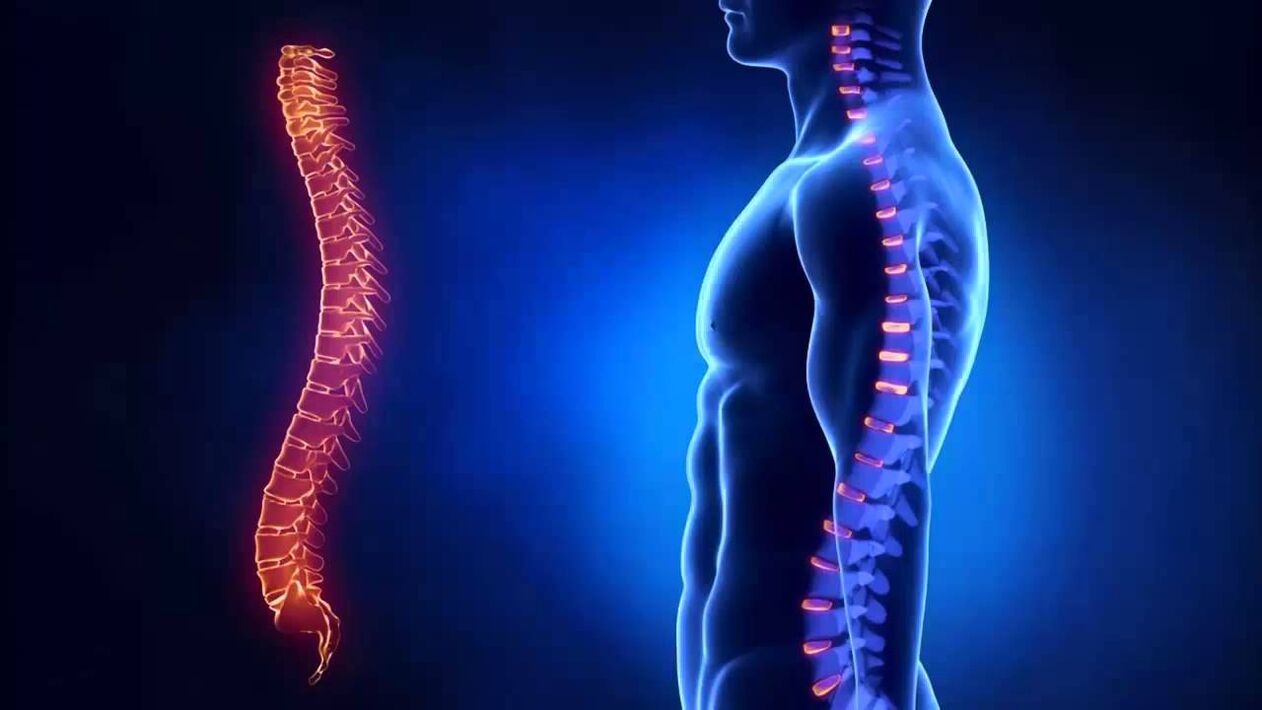
Regarding localization, osteochondrosis occurs:
- cervix.Target the neck area.It presents as a dystrophic disease of the cervical discs and vertebrae, causing pain in the occipital and interscapular areas.
- Chest.It occurs rarely and affects the thoracic spine.Symptoms are similar to those of neuralgia and heart disease.
- lumbar spine.The most common type of disease because the lower spine bears the greatest load.The disease starts with mild symptoms that worsen as the disease progresses.
According to clinical manifestations
With the spread of the disease and the degree of intervertebral disc damage, it can be divided into 4 stages, whose characteristics are shown in the following table:
| stage | Expression | Treatment |
|---|---|---|
| I |
|
Special exercises |
| two |
|
Conservative treatment |
| three, |
|
surgical treatment |
| No. 4 |
|
hospitalization, surgery |
What are the symptoms of osteochondrosis?
Depending on the stage and cause of osteochondrosis, patients may worry about the following symptoms:

- Poor health, weakness, frequent yawning;
- hearing and visual impairment;
- headache and dizziness;
- lose consciousness;
- Runny nose, excessive nasal discharge, or nosebleeds;
- snore;
- sound changes;
- loose teeth;
- Increase or decrease in blood pressure;
- dry mouth;
- numbness in big toe;
- Migratory pain in the spine.
Symptoms of the disease vary depending on the extent of the damage.If osteochondrosis occurs in the cervical spine, the patient will experience shortness of breath.This is due to stimulation of the vagus nerve.I'm worried about pain between my shoulder blades, discomfort when raising my arm, and pain in the xiphoid process.Spinal osteochondrosis presents with impaired function of the upper and lower limbs, disturbing migratory pain in the spine, disrupted menstrual cycles in women, and impaired sexual performance in men.
The symptoms of osteochondrosis are very obvious and should not be ignored, as they only worsen as the disease progresses.If left untreated, a person can be permanently disabled regardless of age.
Why is it dangerous?
If acute osteochondrosis is not treated properly, complications can occur that can lead to disability.If the cause of osteochondrosis has not yet been determined and rapid progression is observed, a herniation will form, followed by rupture of the annulus fibrosus and formation of an intervertebral hernia.In addition, bone growth of the vertebral bodies was observed.Due to these diseases, the brain is affected and does not receive necessary nutrients.This leads to pathological changes in blood pressure and hypoxia.If the disease is determined to be in an advanced stage, patients develop acute dysfunction of the heart muscle, breathing, and swallowing.
diagnosis

If you are concerned about serious symptoms of osteochondrosis, you should talk to your doctor and get diagnostic tests.First, the instrument research method is specified:
- radiography;
- MRI;
- CT;
- Doppler ultrasound;
- Myelography.
How does treatment work?
drug
Osteochondrosis is treatable, but only if the patient seeks medical help in its initial stages.Otherwise, the lesions will keep coming back and the drugs will only bring temporary improvement.Treatment options for osteochondrosis include the use of:
- NSAIDsOr in other words, NSAIDs can help reduce pain and inflammation and lower body temperature.
- chondroprotectant, which will help reduce the process of cartilage tissue destruction, helping to restore it if it has not progressed.
- muscle relaxants, thus relieving muscle tone, which is why the patient's condition improves.
lifestyle and diet
Treatment of osteochondrosis includes following a healthy lifestyle, giving up bad habits and normalizing nutrition.With this disease, it is important to eat well and enrich your diet with calcium, iron, phosphorus, magnesium and B vitamins.It's worth monitoring your drinking habits and trying to drink at least 1.5 liters of plain water during the day.Through diet, it will be possible to halt the process of destruction of bone and cartilage tissue and improve the patient's condition.
surgical treatment
If conservative treatments don't work, surgery may be needed to remove the hernia.The entire disc can be removed and an implant installed in its place.With such an operation, it will be possible to restore the distance between the vertebrae and normalize the patient's condition.
Massage, acupuncture, exercise therapy
Through massage, it is possible to normalize muscle tone, eliminate acute symptoms and restore the nutrition of cartilage tissue.With the help of acupuncture, the body's restorative and metabolic functions are stimulated, thereby reducing inflammation.Exercises help restore mobility to the spine, strengthen muscle tracts, and normalize posture.
folk remedies
The recipe is simple:
- Combine 1 Tbsp.honey, 2 tbsp.Radish juice, alcohol 100 ml.Rub the affected area twice a day.
- Add 1 tablespoon to 500 ml of alcohol.Lilac inflorescence.Leave on for 10 days, then rub the product into the inflamed area daily.

prevention
It is important to always monitor your health and see your doctor at the first symptom.To prevent spinal injury and collapse, you should eat right, distribute the load evenly, and avoid injuries and bruises.Physical activities that help strengthen the spinal muscles such as light exercise, swimming, brisk walking, etc. are also recommended.